

Artificial Intelligence (AI) is dramatically changing business, and chatbots, fueled by AI, are becoming a viable customer service channel. The best ones deliver a customer experience (CX) in which customers cannot tell if they are communicating with a human or a computer. AI has come a long way in recognizing the content – and context – of customers’ requests and questions. Read More
Daily Archives: July 24, 2019
Gallery Go: a fast, helpful way to organize your photos offline
Today, at Google for Nigeria we introduced Gallery Go: a photo gallery, designed to work offline, that uses machine learning to automatically organize and make your photos look their best. Gallery Go helps first time smartphone owners easily find, edit, and manage photos, without the need for access to high-speed internet or cloud backup.
Gallery Go automatically organizes your photos by the people and things you take photos of, so you can easily find your favorite selfie, remember where you had the best puff puff, and keep track of important documents. You don’t have to manually label your photos and all these features run on your phone, without using your data. You can create folders to organize your photos, and Gallery Go works with SD cards, so you can easily copy them from your phone. Read More
Microservices Observability (Part 1)
This is a demonstration of how to observe, trace, and monitor microservices on Java applications in an Openshift environment.
According to microservices architecture and modern systems design, there are 5 observability patterns that help us to achieve the best in terms of monitoring distributed systems. They are the foundation for all who want to build reliable cloud applications. This tutorial will dive into domain-oriented observability, monitoring, instrumentation and tracing in a business-centered approach with a practical view using open-source projects sustained by the cloud-native computing foundation (CNCF). Read More
Key Acquisitions

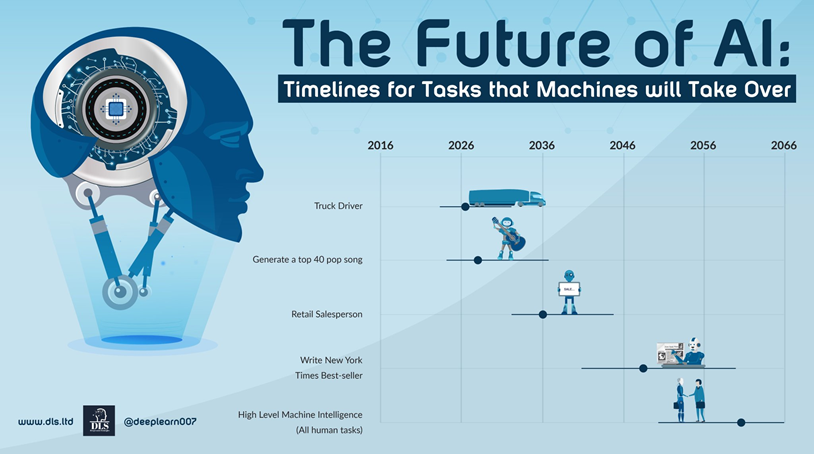
The Future of AI
Machine Learning Interpretability: Do You Know What Your Model Is Doing?
Machine learning has a great potential to improve data products and business processes. It is used to propose products and news articles that we might be interested in as well as to steer autonomous vehicles and to challenge human experts in non-trivial games. Although machine learning models perform extraordinary well in solving those tasks, we need to be aware of the latent risks that arise through inadvertently encoding bias, responsible for discriminating individuals and strengthening preconceptions, or mistakenly taking random correlation for causation. In her book „Weapons of Math Destruction“, Cathy O’Neil even went so far as to say that improvident use of algorithms can perpetuate inequality and threaten democracy. Filter bubbles, racist chat bots, and foolable face detection are prominent examples of malicious outcomes of learning algorithms. With great power comes great responsibility—wise words that every practitioner should keep in mind. Read More
 Rick's Cafe AI