

This is a demonstration of how to observe, trace, and monitor microservices on Java applications in an Openshift environment.
According to microservices architecture and modern systems design, there are 5 observability patterns that help us to achieve the best in terms of monitoring distributed systems. They are the foundation for all who want to build reliable cloud applications. This tutorial will dive into domain-oriented observability, monitoring, instrumentation and tracing in a business-centered approach with a practical view using open-source projects sustained by the cloud-native computing foundation (CNCF). Read More
Monthly Archives: July 2019
Key Acquisitions

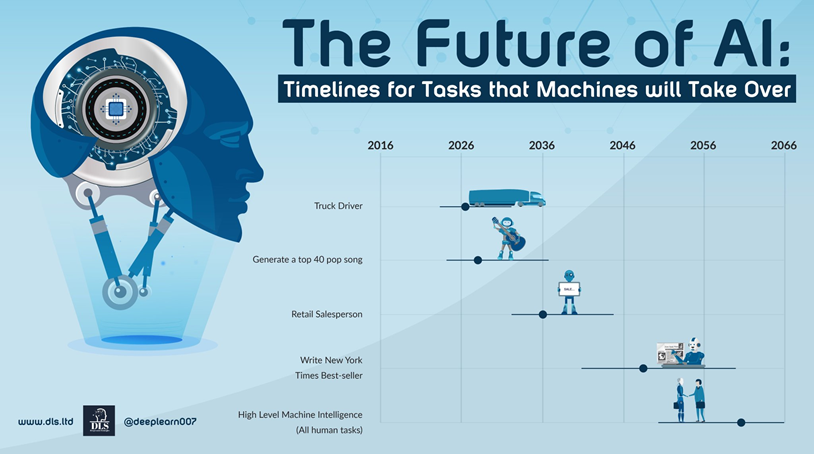
The Future of AI
Machine Learning Interpretability: Do You Know What Your Model Is Doing?
Machine learning has a great potential to improve data products and business processes. It is used to propose products and news articles that we might be interested in as well as to steer autonomous vehicles and to challenge human experts in non-trivial games. Although machine learning models perform extraordinary well in solving those tasks, we need to be aware of the latent risks that arise through inadvertently encoding bias, responsible for discriminating individuals and strengthening preconceptions, or mistakenly taking random correlation for causation. In her book „Weapons of Math Destruction“, Cathy O’Neil even went so far as to say that improvident use of algorithms can perpetuate inequality and threaten democracy. Filter bubbles, racist chat bots, and foolable face detection are prominent examples of malicious outcomes of learning algorithms. With great power comes great responsibility—wise words that every practitioner should keep in mind. Read More
The AI technique that could imbue machines with the ability to reason
At six months old, a baby won’t bat an eye if a toy truck drives off a platform and seems to hover in the air. But perform the same experiment a mere two to three months later, and she will instantly recognize that something is wrong. She has already learned the concept of gravity.
“Nobody tells the baby that objects are supposed to fall,” said Yann LeCun, the chief AI scientist at Facebook and a professor at NYU, during a webinaron Thursday organized by the Association for Computing Machinery, an industry body. And because babies don’t have very sophisticated motor control, he hypothesizes, “a lot of what they learn about the world is through observation.”
That theory could have important implications for researchers hoping to advance the boundaries of artificial intelligence. Read More
Stop Experimenting With Machine Learning And Start Actually Using It
It turns out there’s a fatal flaw in most companies’ approach to machine learning, the analytical tool of the future: 87% of projects do not get past the experiment phase and so never make it into production.
Why do so many companies, presumably on the basis of rational decisions, limit themselves simply to exploring the potential of machine learning, and even after undertaking large investments, hiring data scientists and investing resources, time and money, fail to take things to the next level?
Quite simply, an inbuilt experimental mindset. Read More
OUTERHELIOS – Free Jazz – 24/7 Neural Network Livestream – NASA – Coltrane
Understanding Artificial Intelligence
When I published the article “Understanding Blockchain” many of you wrote me to ask me if I could make one dedicated to Artificial Intelligence. The truth is that I hadn’t had time to get on with it and before sharing anything, I wanted to finish some courses in order to add value to the recommendations.
The problem with Artificial Intelligence is that it’s much more fragmented, both technologically and in use cases, than Blockchain, making it a real challenge to condense all the information and share it meaningfully. Likewise, I have tried to make an effort in the summary of key concepts and in the compilation of interesting sources and resources, I hope it helps you as well as it did to me! Read More
Making Algorithms Less Biased
For several years now, critics have raised questions about new risk assessments used to help judges decide whether defendants can be released from jail before trial. They have argued that the algorithms at the heart of those reviews too often end up introducing racial bias into what is supposed to be a more fair process.
The Center for Government Excellence on Monday released a toolkit designed to help local officials root out that kind of bias by improving the fairness and transparency of data science projects in their pipelines. Read More
Is China’s Expertise In Artificial Intelligence Over-Hyped?
China has been often touted as the fastest emerging hub for AI development, even surpassing the superpowers such as the USA in the emerging tech. Chinese companies and government are taking the analytics and AI play quite seriously, bringing newer and favourable policies around its adoption.
Numbers suggest that in 2018, 60 per cent of total global AI investments poured into China with investments from VCs, private equity and the Chinese government. Not just the companies but educational institutes are taking AI seriously as many schools are teaching AI courses to make its citizens AI-ready.
There is no doubt that China has been serious about its AI strategy, but is its power and supremacy in artificial intelligence real or exaggerated? Read More
 Rick's Cafe AI