

Google says it’s backing Middle Eastern news projects that develop new business models.
Google has awarded just under $2m to 21 projects in the Middle East, Turkey and Africa, following the first Google News Initiative (GNI) Innovation Challenge in the region.
The move is part of a wider series of regional innovation challenges, and a global commitment from Google News to give $300m “to help journalism thrive in the digital age”. Read More
Monthly Archives: October 2020
The technology that’s replacing the green screen
An AI bot has figured out how to draw like Banksy. And it’s uncanny
GANksy aims to produce images that bear resemblance to works by the UK’s most famous street artist
With Banksy’s market hotter than ever, hopeful collectors might be keen to discover what appears to be a newly released collection of 265 works by the anonymous street artist. Except they are not.
Rather, they are the creation of a new artificial intelligence (AI) software named GANksy, which has been programmed to create works that attempt to mimic those of “a certain street artist”. Read More

IBM AI model predicts onset of Alzheimer’s disease by analyzing descriptions of a cookie theft
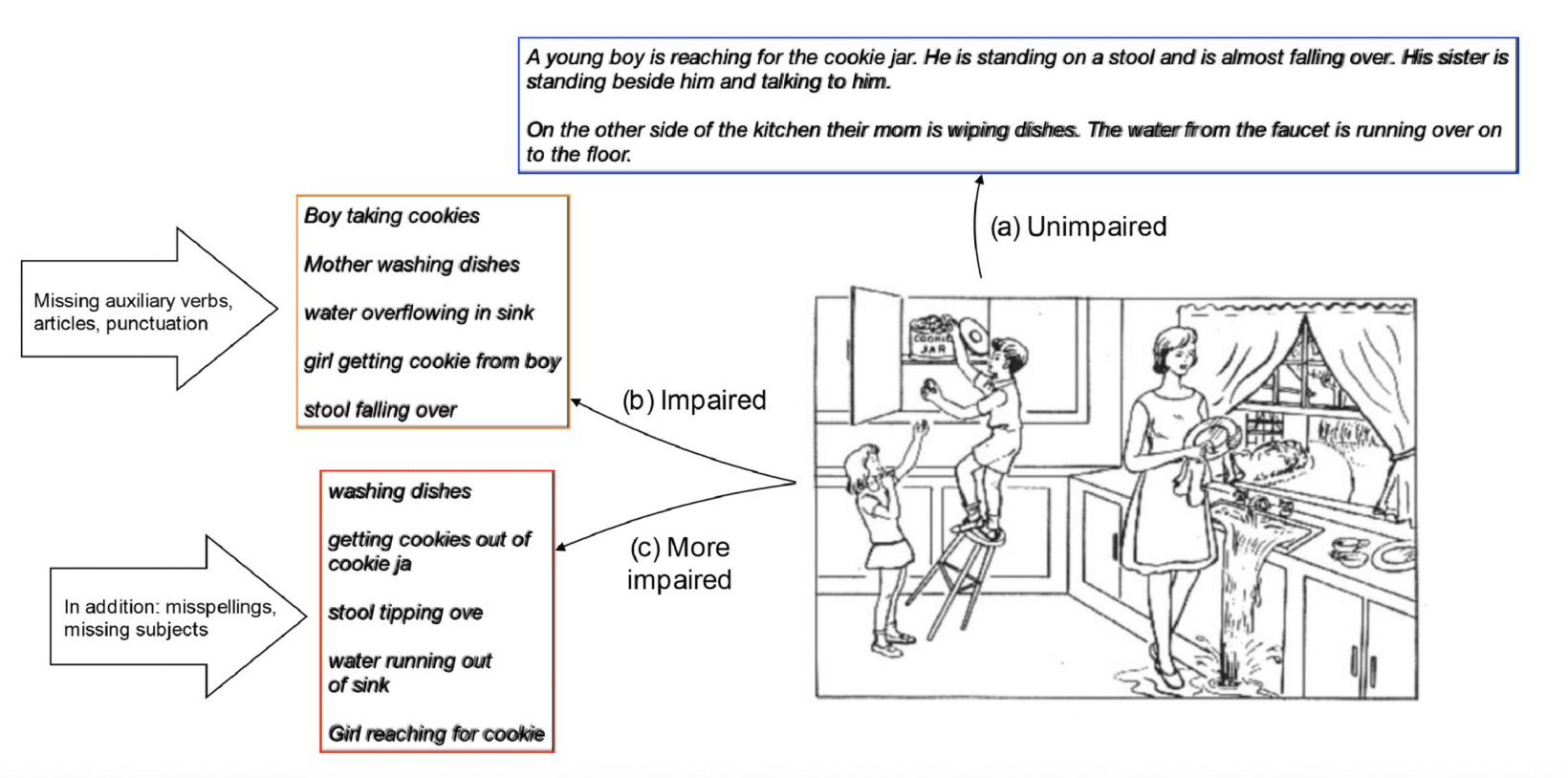
A new AI model can predict the onset of Alzheimer’s disease more accurately than standard clinical techniques by analyzing how people describe a picture of a cookie theft, according to a new study. Read More
AI Assesses Alzheimer’s Risk by Analyzing Word Usage
New models used writing samples to predict the onset of the disease with 70 percent accuracy
Artificial intelligence could soon help screen for Alzheimer’s disease by analyzing writing. A team from IBM and Pfizer says it has trained AI models to spot early signs of the notoriously stealthy illness by looking at linguistic patterns in word usage. Read More
Machine-Assisted Companies Will Be A Completely New Beast
Machine learning elevates the importance of people using the data. More data enables more automation, which requires more leadership.
… The big difference in a machine-assisted company is that instead of dictating decisions downwards, leaders use quantitative data-driven analyses to shape their qualitative decision-making.
Synthesis is a supremely human skill, same as storytelling. Read More
Why ‘The Mandalorian’ Uses Virtual Sets Over Green Screen
Algorithms Are Making Economic Inequality Worse
The risks of algorithmic discrimination and bias have received much attention and scrutiny, and rightly so. Yet there is another more insidious side-effect of our increasingly AI-powered society — the systematic inequality created by the changing nature of work itself. We fear a future where robots take our jobs, but what happens when a significant portion of the workforce ends up in algorithmically managed jobs with little future and few possibilities for advancement?
… How many Uber drivers do you think will ever have the chance to attain a managerial position at the company, let alone run the ride-sharing giant? … There’s a “code ceiling” that prevents career advancement — irrespective of gender or race. Read More
Software Engineering for Machine Learning
Software Engineering for Machine Learning are techniques and guidelines for building ML applications that do not concern the core ML problem — e.g. the development of new algorithms — but rather the surrounding activities like data ingestion, coding, testing, versioning, deployment, quality control, and team collaboration. Good software engineering practices enhance development, deployment and maintenance of production level applications using machine learning components. SE-ML provides a curated list of articles covering the intersection of these two disciplines. Read More
#machine-learningContinuous Delivery for Machine Learning
Automating the end-to-end lifecycle of Machine Learning applications
Machine Learning applications are becoming popular in our industry, however the process for developing, deploying, and continuously improving them is more complex compared to more traditional software, such as a web service or a mobile application. They are subject to change in three axis: the code itself, the model, and the data. Their behaviour is often complex and hard to predict, and they are harder to test, harder to explain, and harder to improve. Continuous Delivery for Machine Learning (CD4ML) is the discipline of bringing Continuous Delivery principles and practices to Machine Learning applications. Read More
 Rick's Cafe AI